
The Brightness of Hope
The Brightness of Hope: Advent Lessons from J.R.R. Tolkien
This is part one of a four-part Advent series written by our teachers reflecting on a new advent theme and how that theme is reflected in the Magdalen curriculum.
One of my favorite things about the Magdalen Classical Academy Inklings curriculum is how our students are always reading J.R.R. Tolkien’s masterpiece The Lord of the Rings around Christmas time. I remember as a high school student myself attending the midnight premiers of the Peter Jackson films on cold December evenings in the early 2000s with my classmates, and the breathless excitement we all felt, hardly knowing what to expect from the new films. We bundled up in coats, scarves, and mittens and drank peppermint mochas to keep warm and keep awake in the long theater lines as we waited for the clock to tick toward midnight.
The Lord of the Rings may not seem particularly Christmassy to everyone. It’s a story about hobbits, elves (not the Santa kind!), wizards, and men fighting deadly battles against a great evil that threatens the world. Unlike in C.S. Lewis’s Narnia books, Father Christmas doesn’t visit in Tolkien’s story (but imagine if he did?!). But if there’s one reason to read The Lord of the Rings at Christmas time, I think it’s this: Tolkien maybe understands hope better than any writer in our curriculum. Maybe better than any writer period. And hope is one of the essential pillars of Advent and Christmas.
In The Lord of the Rings, Tolkien goes out of his way to tell us how the quest to destroy the Ring is virtually hopeless. No man, dwarf, or elf can withstand the corrupting influence of the One Ring—it cannot be wielded for the cause of good, it cannot long remain hidden, and as Sean Bean argues,

“One does not simply walk into Mordor.”
Gandalf, on the other hand, suggests that the futility of the task may be an asset: Sauron would hardly expect them to seek to destroy it, and they would have the advantage of stealth and surprise.
But it is Elrond who reframes this “fool’s errand” the Fellowship is about to embark upon as worthy of hope. He tells them that “This quest may be attempted by the weak with as much hope as the strong. Yet such is oft the course of deeds that move the wheels of the world: small hands do them because they must, while the eyes of the great are elsewhere” (The Fellowship of the Ring, Part 2, Chapter 2).
Elrond here casts hope as the steadfast work of putting one foot in front of the other, even when the road looks rough, even when it looks impassable. We see this steadfast commitment almost immediately when the Fellowship leave Rivendell and seek to scale Caradhras. Soon after they ascend the mountain, they are forced to retreat due to the bitter cold and the violence of the snow storm that meets them. Though their plans are thwarted, they continue on, seeking passage through the darkness of the Mines of Moria, which they fear may be even more perilous than the mountain pass. But the Ring isn’t going to destroy itself, so it’s up to them to keep trying.
And that’s another thing about hope in Tolkien’s story: it draws together all the peoples of Middle Earth and unifies them in a single hope. The nine members represent the dwarves, elves, men, hobbits, and wizards of Middle Earth. They have different callings, duties, and desires, but they all submit together to the task of protecting the Ringbearer and getting him to Mordor, no matter how slim the chances of success may be. In this hope, they join together in the brotherhood of all man-elf-dwarf-hobbit-wizard-kind. Their conflicts and differences diminish in service of this hope, and the bonds of fellowship and friendship blossom and fruit forth.
The final quality of hope that I notice in Tolkien’s tale is that hope is something the Company carry with them. Hope is part of the gift given to Frodo by the Lady of Lothlorien to be a light when everything seems dark, a phial of the light of Eärendil, the star of Hope. And the value of this already tremendous gift is magnified by Frodo’s memory of the generosity of the giver.
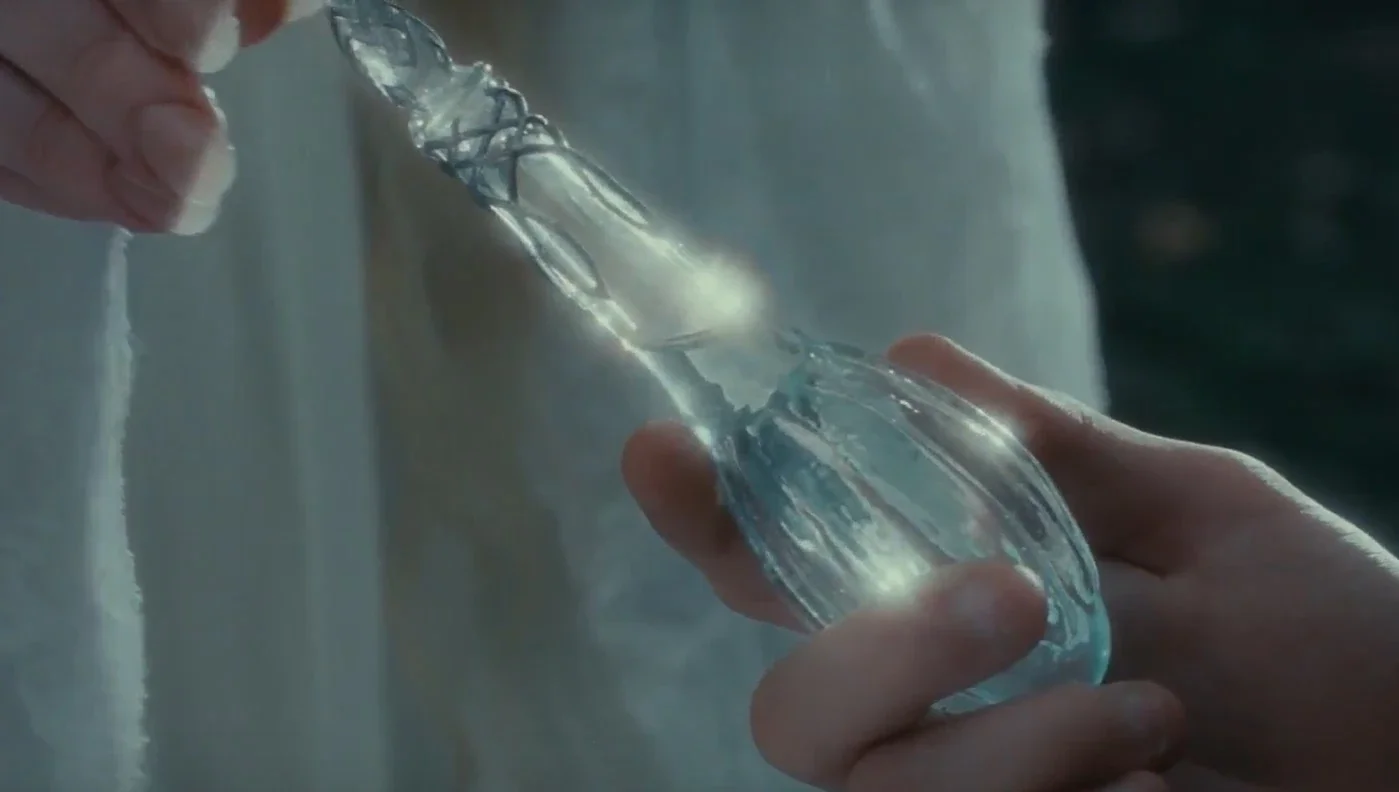
The Phial of Galadriel
Frodo uses the Phial of Galadriel to keep dark thoughts and desires at bay, to defend against enemies of darkness, and to reach for strength beyond his own. In one of my favorite passages from the whole book, as they climb nearer to Mount Doom, Sam sees the stars for the last time before the sky becomes totally obscured by smoke, cloud, and shadow:
There, peeping among the cloud-wrack above a dark tor high up in the mountains, Sam saw a white star twinkle for a while. The beauty of it smote his heart, as he looked up out of the forsaken land, and hope returned to him. For like a shaft, clear and cold, the thought pierced him that in the end the Shadow was only a small and passing thing: there was light and high beauty forever beyond its reach. His song in the Tower had been defiance rather than hope; for then he was thinking of himself. Now, for a moment, his own fate, even his master’s, ceased to trouble him. He crawled back into the brambles and laid himself by Frodo’s side, and putting away all fear he cast himself into a deep untroubled sleep. (Return of the King, Part 2, Chapter 2)
The Star Sam sees is the one whose light they carry with them: Eärendil, the Star of Hope. But it is the knowledge of the Star away up in the heavens, shining on steadily behind the gathering clouds, that allows Sam to slumber in peace. The light is with them in the phial, safely tucked away, but the comfort comes from the reality of that greater light that shines beyond all darkness—here now already with them, but also not yet.
Tolkien reminds us that though we may walk the paths of tragedy and hardship in this life, beyond our struggle waits the greatest beauty and goodness beyond our humble hopes, and the journey is worth the struggle. But there are times we must make the conscious choice to keep putting one foot in front of the other, to knowingly walk into the darkness of Mordor if we must. If we can remember the light, that is enough to keep us going. The darkness has not overcome it.
As you navigate this advent season, may you look to the light—may the star of hope draw you home once again to the humble stable where a baby king’s first cries were heard amidst the angels’ Gloria!
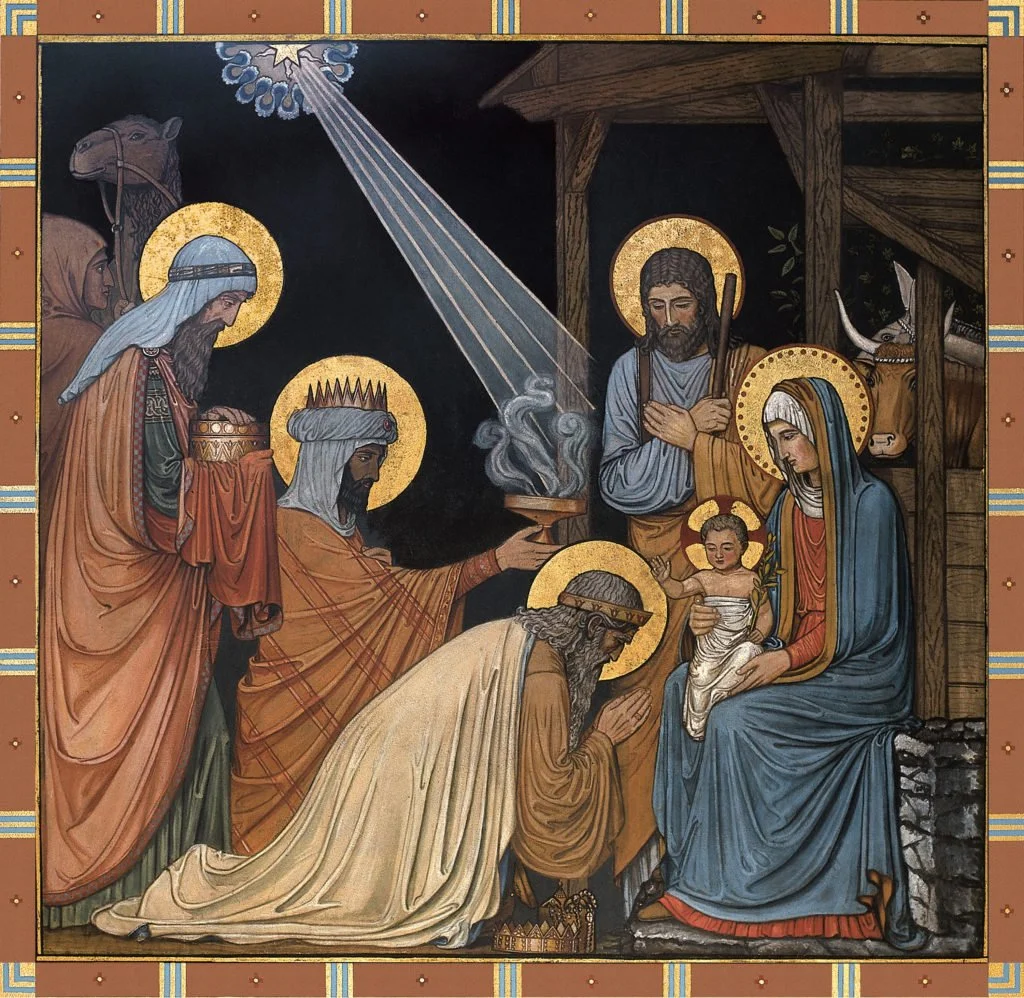
Icon of the Adoration of the Magi
Note: Tolkien borrowed the name Eärendil from an Anglo-Saxon poem about the Advent of Jesus called Christ I. In that poem, Earendel is the name of the “brightest of angels,” the very star that stood over the stable where Jesus was born. Another Lord of the Rings connection to Christmas!
